Every gambler has that moment. You've got a hundred bucks earmarked for entertainment, you're logged into your favorite platform, and you're staring at two very different buttons: one leads to a spinning reel of neon fruit, the other to a green felt table where a guy in a vest is shuffling cards in real time. Slots or poker? Most people just pick whatever feels right in the moment. That's fine, but if you actually want your money to last longer than your first coffee, it helps to understand what you're really buying into.
Let's break down the two dominant pillars of iGaming—slots and poker—and what separates them beyond the obvious visuals.
The House Edge Is Not a Small Detail
This is the part most casual players gloss over, and it's the single biggest factor in whether you walk away up or down. Slots and poker expose your money to fundamentally different risk structures.
Online slots typically carry a house edge somewhere between 2% and 8%, depending on the game and whether you're chasing a progressive jackpot. A standard 96% RTP slot means you lose about four cents on every dollar wagered over the long run. That sounds brutal, and it is if you hundreds of spins. But here's the trade-off: slots are pure chance. No decision you make changes the math. You press, you watch, you hope. Anyone weighing up options should see slot deposit 5000.
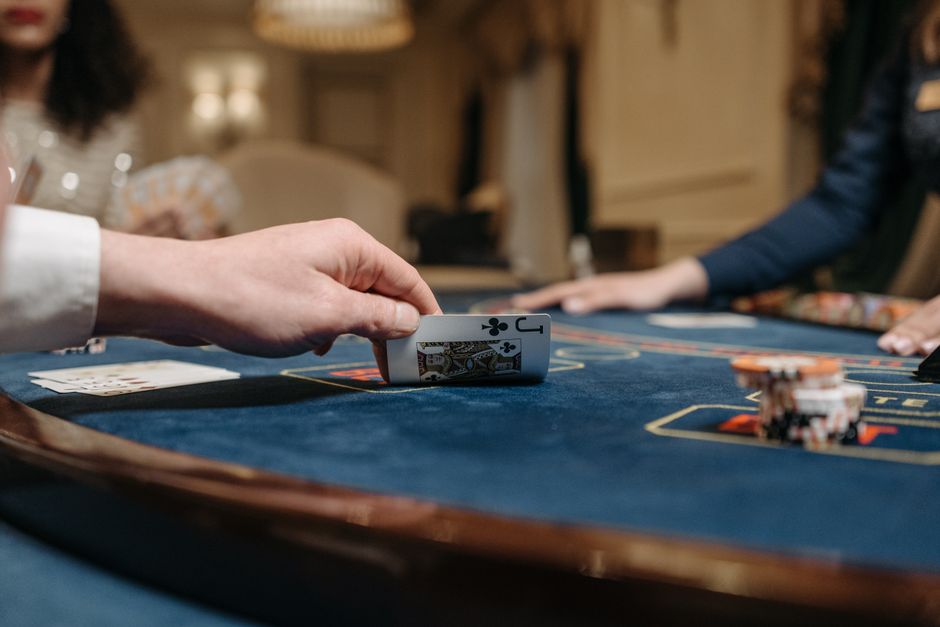
Poker is the opposite. A good cash game player at micro-stakes might face a house rake of 5% capped at a few dollars, but that's not the real edge. The real edge is the other players. If you're better than the field, you can achieve a positive expected value. If you're worse, you're the fish feeding the ecosystem. There's no RTP percentage that saves you from being outplayed.
- Slots: Fixed, transparent odds. No skill influence. Fast results.
- Poker: Variable odds based on table composition and your ability. Slow results, higher ceiling.
The takeaway: if you want a predictable, uncomplicated drain on your bankroll with occasional massive spikes, slots are honest about what they are. If you want a chance to actually win long-term, poker demands study and discipline—and even then, variance can crush you for months.
Bankroll Management Actually Matters More Than Picking the 'Right' Game
I've watched players lose a $500 bankroll on $5 spins in twenty minutes. I've also watched a guy grind a $50 deposit into a $300 cash game session over four hours. The difference wasn't the game. It was the discipline.
For slots, a common rule among experienced players is to set a session limit of no more than 1-2% of your total bankroll per spin. If you have $200, that means betting no more than $2 to $4 per spin. That gives you 50-100 spins to actually experience the volatility of the machine. Chasing a bonus round on a slot with a 10,000x max win is pointless if you bust before spin 30.
For poker, the math is different but the principle is the same. A standard rule for cash games is 20 to 30 buy-ins for the stake you're playing. If you're at $0.05/$0.10 no-limit hold'em, a buy-in is usually $10, so you'd want $200 to $300 dedicated to that level. Tournament bankrolls need even more—50 to 100 buy-ins—because the variance is savage. The guy who wins a $5 tournament doesn't prove anything; the guy who plays 500 of them and stays profitable is the one who understands the grind.
Speed Kills (Your Money, That Is)
One underrated difference between slots and poker is the pace of decisions. A slot spin takes three to five seconds. You can easily rack up 400 spins in an hour. At $1 per spin, that's $400 wagered per hour. Even with a 96% RTP, you're statistically losing $16 per hour—but the variance means your actual result could be -$200 or +$800.
Poker, by contrast, moves slower. A hand of online cash game poker takes 30 to 60 seconds if you're playing one table. If you're multi-tabling four tables, you're still only seeing maybe 300 hands per hour. The money flows differently. You have time to think, to fold, to wait for a spot. That slower rhythm is a feature, not a bug. It gives you room to make better decisions.
But here's the catch: poker's slow pace can also magnify leaks. If you're a losing player, you're just bleeding more slowly. If you're a winning player, you're compounding your edge over thousands of hands. Slots don't care about your skill. Poker is a mirror.
Bonuses and Promotions Favor the Patient
Both slots and poker rooms use bonuses to attract players, but they're structured very differently. Slot bonuses often come as free spins or deposit matches with wagering requirements of 30x to 50x. That means if you get a $100 bonus, you might need to wager $3,000 to $5,000 before you can withdraw anything. On a 96% RTP slot, the expected loss from that wagering is $120 to $200—more than the bonus itself. These offers are not free money. They're a marketing tool designed to keep you spinning.
Poker bonuses are typically released as rakeback or cleared through playing hands. You earn a few dollars back for every hundred hands you play, or you get a percentage of the rake you generate. It's slower, but it's real value. A 30% rakeback deal on a poker site is worth more than a shiny 100% deposit match on a slot site if you're a volume player.
If you're going to chase bonuses, read the terms. Look at the wagering contribution. Slots usually contribute 100% to wagering. Poker often contributes 0% or a tiny fraction. That single line in the fine print changes everything.
Which One Is Actually More Fun?
This is the question no spreadsheet can answer. Slots are pure entertainment. The lights, the sounds, the near-misses—they're engineered to trigger dopamine. There's no shame in enjoying that. It's a theme park ride with a price tag.
Poker is competition. It's a puzzle, a battle of wits, a long grind with moments of pure adrenaline. The highs are higher because you earned them. The lows are lower because you know you misplayed a hand. If you like solving problems and outsmarting opponents, poker will hold your attention for years. If you just want to lean back and watch the reels spin, slots deliver exactly that.
My honest advice: don't pit them against each other. Treat them as two different products. Use slots when you want mindless fun and you've already accepted the cost. Use poker when you want to test your skill and you're willing to study. The worst mistake is playing slots with a poker mindset—chasing losses because you think the next spin is 'due.' The second worst is playing poker with a slot mindset—calling every bet because you want action.
Know which game you're playing. Then play it on purpose.